

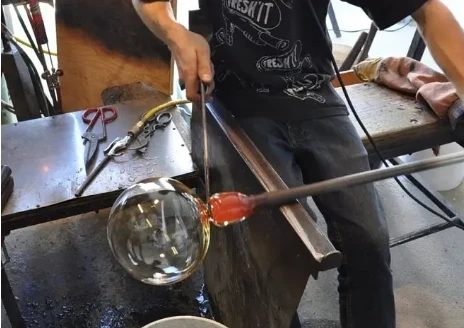
The process of hand blowing glass
Hand blown glass
Hand-blown glass is an ancient craft, invented by craftsmen about 2,000 years ago.
The process of hand-blown glass is as follows:
1 Pick
After the quartz sand and various color forming accessories are processed by high temperature, they become liquid, and the blowing master uses a picking rod to pick out a small piece of material in the material pool.
2 Blow the bubbles
The blower will pick out the glass and blow a small ball (like a small light bulb) through the pick rod.
3 Blow cannon
Another blower puts the blown bubbles into the material pool, then dips some liquid into the open mold, and blows out the desired shape of the mold. (This process requires blowing workers to have many years of blowing foundation before taking up the post)

4 Heat and control the temperature
After the blown mold is formed, there is a cup body, and the bottom of the cup body should continue to be processed, so the temperature can not be lowered, so this part should be heated and controlled.
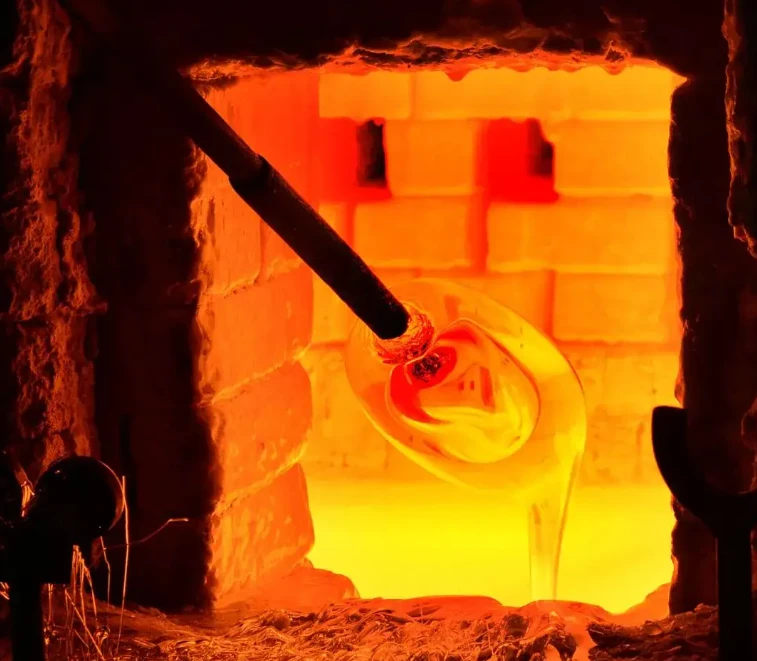
5 Stretch
After baking the sticky material under the cup body at high temperature, make it into a cup stick and control the size according to the requirements. No ruler is used, the craftsman relies on the "visual" experience to make it, and the visual error is accurate to the required range. This process is the biggest difference between hand-blown glass and machine-made glass.
6 Base
Once you've pulled it up, you're gonna make the base of the cup. First pick a little material to stick to the end, stick good material after the excess cut off, and then use the splint tool to make the bottom of the cup.
7 Annealing
After pinching the bottom, the cup is basically formed, and then put into the annealing kiln for annealing treatment, this step is to reduce the stress of the cup
8 opening
After removing the stress, when the cup cools down, there is excess waste at the mouth of the cup, the upper part is cut according to the required size after measuring by the scale, and the glass knife is pulled around the cup and then roasted with the fire, the excess part falls off by itself.
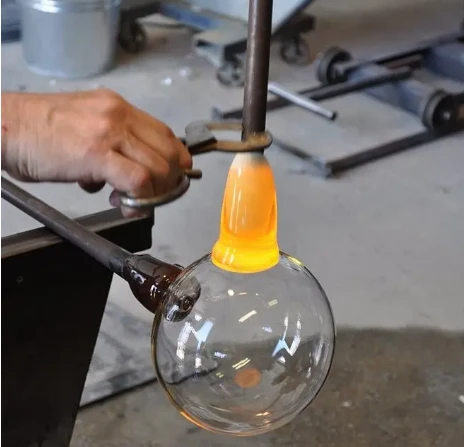
9 Grinding
After the step, the mouth of the cup is easy to cut people, so it is necessary to smooth the mouth of the cup evenly on the electric water grinding stone.
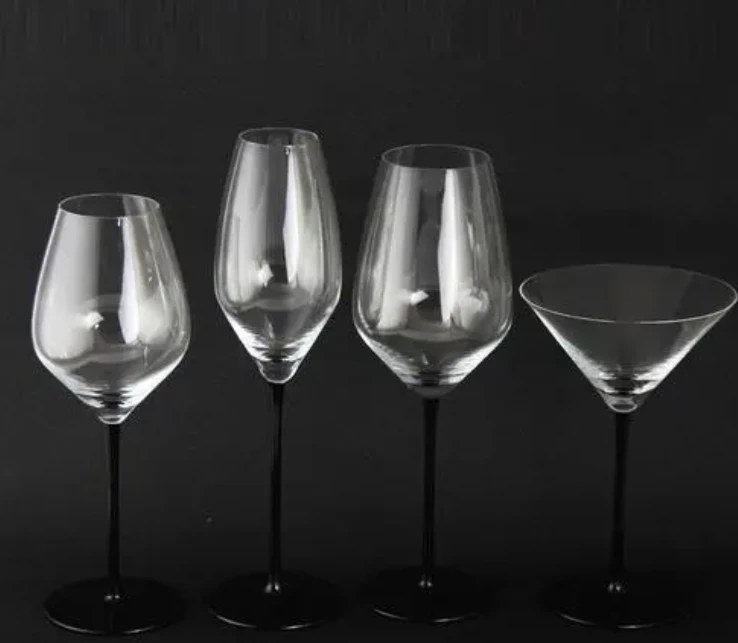
10 oven
Heat the rim of each cup over high heat to soften the edges before smoothing them.
11 Inspection of Packaging
The inspector inspects each molding cup and selects it according to the quality requirements. After inspection, the cup is scrubbed, packed and stored by the packer.
In the process of hand-blown glass, due to the slow flow of hot glass paste, the air between the glass blocks can not come to the surface and naturally form bubbles, which is normal, and is also an important feature of the visual difference between hand-blown glassware and machine-made glassware. And artists also use bubbles to express the life texture of glass, and bubbles have become a part of appreciating handmade glass art!
- Four reminders:
Handmade glass products have bubbles within 2mm, internal feather patterns, and slight cup rotation patterns, which are normal process phenomena, and are not workmanship defects and quality problems.

Why hand-blown glass?
1, compared with a single mechanism of transparent material, inflexible and lack of fastness. The transparent material of hand-blown glass products can be supplemented with various decorations, rich in color, changeable in shape, light in appearance, with streamlined beauty, and hidden natural vitality of bubbles and water ripples, which is better fastness.
2, the output of the mechanism is high, usually a medium production line can reach tens of thousands or even hundreds of thousands of daily production, but there is no manual technology content. Each production link of each hand-blown glass product is manually completed, the output is low, usually the daily output of each production team is hundreds, but each product contains the unique skills of the craftsman and the work of carving.
3, the mechanism of the product more to meet the use of consumer functions, lack of ornamental, low value. The reason why hand-blown glass has a high value is that it not only has practical functions, but also contains the expression of the craftsman's mind. Under the skillful manual interpretation, glass is no longer a cold instrument, it has temperature, personality, and can convey a different message to the owner.